"Commerce is still personal" - in conversation with Simon Dyer, Mirakl
Ian Jindal (00:01.417)
Hello, dear listener, and welcome back to the Commerce AI podcast studio. We're on a hot summer's day with the windows open. I'm joined in the studio by Simon Dyer of Miracle. So expect barking dogs, people sanding the outside of their houses just to prove that we are live and coming to you directly into your ears. So I'm Ian, one of the founders of RetailX and
We're looking forward to our Commerce AI Summit on the 3rd of June. So if you look at your calendar and you realize it's not yet the 3rd of June, then click on the link in the notes and come and join us in London for a day of think tanking and brain stretching conversation. If, however, the 3rd of June is in the rear view mirror, then the next half an hour is just going to show you what you've missed.
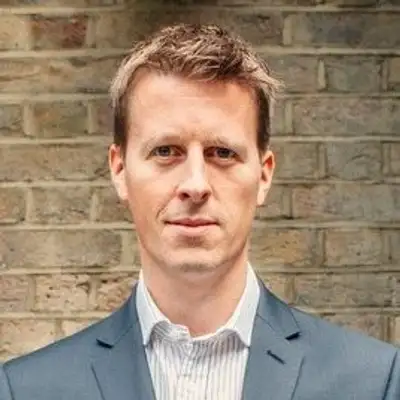
And you'll therefore be grateful that we'll have written up some notes as well to follow up. So, Simon, in anticipation of next week, it's a great pleasure that you'll join us in real life there as well. But want to kick us off and tell us a bit about you, Simon the Human, and Miracle the Organization.
Simon Dyer - Mirakl (01:18.764)
Yeah. Well, it's nice to be on the podcast Ian. So my name Simon Dyer. I'm the regional vice president at Miracle. It means I look after the UK, the Nordics, the Middle East and Africa. Miracle as a company, we provide a platform that allows organizations to become a marketplace or run a drop ship business model and a few models in between. But ultimately they are monetizing their customer base. They are extending their range and their stock without incurring the costs of tying up capital in that.
stock filling up warehouses and not having that stock move. So it's all about taking commission or a margin on the products you're selling.
Ian Jindal (01:56.062)
And in a way, you are like the 21st century version of the department store, extended range, shop of the world, the rebirth of eBay, all rolled up into one.
Simon Dyer - Mirakl (02:14.476)
Yeah, I think that's fair. know, people have always sold products to other people and they've always tried to find the products that people are looking for that you don't sell today. So you're absolutely right. We have lots of department stores who use us and more of an e-concession model for providing the products their customers want that are maybe extended range, different colors, the kind of stock they don't want to hold in store. But being able to make sure that the customer can find what they want when they come visit, trying to get the whole transaction in one go.
Ian Jindal (02:44.413)
Yeah. And so if you look at the evolution of that over the last, it feels like 20 years, maybe a little bit more briefly, but definitely, you know, when Miracle started at the dawn of EECOM, it was a real shift in that you are providing more product customers and more opportunities for vendors to get themselves online and be seen via partners. But
In the last two decades, there's been an explosion that's changed the whole face of retail. So whether it's people's ability to get online directly via Shopify, to sell via social commerce, to extend their marketplace, to be on marketplaces. I mean, the whole commerce landscape seems to be everything, everywhere, every channel for everyone.
every second of the day. mean, it's it's a combinatorial explosion of commerce opportunity and data.
Simon Dyer - Mirakl (03:50.574)
Yeah, I mean, that's almost our strap line, know, everything everywhere all the time. It's you've got you've got organizations who are running their online businesses and there's only so much capital to invest in stock, but there is, you know, an infinite supply of products out there. And all the companies I talked to are trying to be a bigger version of themselves. They don't want to be one of the large online marketplaces where, everything for everybody. They just want to be a bigger version of themselves and provide what their customers.
you know, are searching for. it's also an ecosystem play. You know, you mentioned sellers there for Shopify, you know, there are thousands of absolutely brilliant sellers out there. You've got, know, the brands themselves, but you've also got individual smaller sellers who are really making a push and they need FaceTime. So creating this ecosystem where an organization with the brand, the reputation and, and, the traffic can bring on those third party sellers who don't
ordinarily get access to that traffic, but have a trust relationship where, where the retailer provides the trust and the visibility for those smaller sellers to be seen and, and sell stock. And these smaller sellers, they, they know what price to sell their products at. They know what works. you know, they're a real boon to the retailers today who, it's a, it's a tough environment out there for retailers.
So to be able to offer the customer more choice to answer the search queries that they're bringing is fantastic for both parties.
Ian Jindal (05:21.791)
Now, another bit that sort of emerged is the retail media side. And so in a way, this, seems obvious in retrospect, but I mean, at the time I remember being surprised, because I what a good idea, because you have so much customer data, so much product information, so much channel and transaction information, first party data that you've become, as well as a leading
marketplace provider, you are now a major retail media player as well. So this big data has sort of spun up, if you like, another whole industry. Do you want to just draw a line for our listener between, you know, all of that product and commerce data and now monetizing it via ads?
Simon Dyer - Mirakl (06:16.043)
Yeah, absolutely. So as, as miracle, we, you as you say, we started off as a marketplace and drop ship organization. You imagine you've got our customers, the big retailers are bringing on lots and lots of third parties, in terms of, products, that they're selling and also retailers to end up with this ecosystem of the re of the retailer in the middle, who we call the operator of the platform. You've got the customer and you've also got this, this army of sellers and most
of our platform operators have a few organizations that spend a lot of money with them on retail media. So that is having their products promoted, being on the first line of the returns. And it's quite a labor intensive model, but it's quite lucrative. You you're looking at 70 to 80 % profit on retail media fees because you're literally selling space on a screen. However, that model falls down.
when you think about adding hundreds or potentially thousands of sellers onto a marketplace, because you don't want to keep throwing people at that problem. So you need to create a scenario where this longer tail of sellers can self serve because they're desperate to spend money on the retail media. In fact, they're willing to spend a little bit more in our studies to get their heads above the parapet from the bigger boys because they've got to compete. So if you think about
a platform operator, they're running a marketplace, they've got lots of sellers, they've got lots of customers, and they've got sellers who are willing to spend money. So you end up with this flywheel approach. On a standard marketplace, you'll have customer demand, you'll have products, increased choice, and that gives you increased competition. And that's where the sellers bring in, they start to spend money and increase the personalization and the customization of products that are put in front of customers.
It wasn't something that we did from day one. It was really something that as we look to become a multi-product company, it was very, very complimentary to what we run today. And it satisfies two, right. It satisfies three needs, suppose, increased personalization in a world of lots of products for the end customer. So being presented with the right product for them, from a seller, it allows them to get more visibility for their products in front of the customer. And for the operator, they're not providing, not only providing a good customer experience, but they're also generating,
Ian Jindal (08:13.971)
Hmm.
Simon Dyer - Mirakl (08:35.531)
what is quite profitable revenue.
Ian Jindal (08:37.609)
Good. Well, I mean, that is a really good background and let's segue now to some of the AI facing questions. So you've outlined your corporate path as you've ploughed a new furrow, made new opportunities, and you're well placed, therefore, as someone who sells AI powered things to an AI hungry sector.
I suppose my question is whether this really is a structural shift and or is it literally just 2016 faster with a chatbot at the front? So as you reflect on how your clients and your business is changing, could you maybe pull out that? What do you think the structural, you know,
The shifts that historians are going to look at and say this was absolutely different rather than just last year dialed to 11. What's the structural change we're looking at?
Simon Dyer - Mirakl (09:47.662)
Yeah, there's, I mean, there's a few, to be honest. You, if you think about the way people are using AI now, AI is increasingly acting as the customer on behalf, on their behalf. So it's, people are also outsourcing decision-making in my opinion, and they're looking for recommendations. So they're not just searching for white sneakers, they're being and scrolling through 10 pages.
They haven't got time and the number of products out there is a lot. So they are asking, you know, I've got a wedding in Italy next year. I'm wearing a blue suit. It's going to be 35 degrees. Give me some comfortable white sneakers between 80 and 120 pounds, right? Give me the top three and what are the pros and cons? That's how people are searching. So as we sort of alluded to earlier, the data that underpins that needs to be able to answer those questions. Now, if you're holding data about the shoe size, the color and the material,
you've not really answered any of those questions that I asked for. I'm asking questions about how it makes me feel, how they go with other items of clothing I'm wearing. And that's the kind of data that you need to hold. I think one of the sort of underlying structural shifts that you're asking about is how do we satisfy the way people are asking their questions now from a data perspective? And that's where people are
There's some early movers who are really getting to grips with the kind of data that can support those. there's others who haven't caught up yet. And I'm kind of nervous that the ones who aren't considering this yet will become invisible to the LLMs as they make their recommendations to customers.
Ian Jindal (11:29.565)
Yeah, now, ever since the dawn of EECOM, as soon as people managed to get a product onto a product page, there's been an obsession around attributes, factual attributes, behavioral, attitudinal. And for years, it's been a combination of, you know, cocktails, algorithms, Bayesian, you know, analysis, stuff right and center.
or I should say, you know, pre, post and anti rather than left, right and center. But we've had all of this analysis has been getting faster and faster and faster. And we've always had to top it up with quote unquote the brand voice. So, you know, for handsome men about town, these white trainers go really well when you're at the weather spoons wearing a blue shirt or something. So we've covered off a lot of that with content.
Simon Dyer - Mirakl (12:14.935)
Mm-hmm.
Ian Jindal (12:28.627)
So to what extent are we now seeing that the current agentic moves are just building on that? Or is it a whole new ball game that takes us into a whole new level?
Simon Dyer - Mirakl (12:46.655)
So there's definitely an element of building upon it. When you think about how we need to treat every product page as a digital sales person now for AI, enriching catalogs is kind of where I was going with that. Enriching catalogs with LLM optimized attributes. So not so much SEO, but more GEO, which is generative engine optimization. So that when an agent is searching for those white trainers,
your product gets recommended and your catalog needs to be optimized to be found by those LLMs and their algorithms. And the speed of change of those algorithms of how they're searching is going to be very difficult for retailers to keep up with to make sure that they may have a fantastic data set underneath. They may have done everything right, but the algorithms are changing all the time as well. So they need to make sure that they're
their actual data is able to be found. I think that's the first one. I also think that from an experience perspective, AI can create genuinely better product experiences with richer discovery, I think, and more accurate recommendations through this conversational search. It's the understanding of intent rather than the matching the keywords.
is what's different. And that isn't necessarily a competitive advantage here from the AI itself. I keep going back to it. It's the quality and depth of the product data that's feeding it. And that's where retailers, I believe, need to be investing right now.
Ian Jindal (14:23.898)
And so where does the retailer come into this? If you take something like a brand that has a well-known credible product, take for example New Balance, know other other training shoes are available. If you take something like that, you know, they'll have maybe a sizing you like given your weight, your running style, you know, your fashion sense, etc. So the manufacturer
will be investing in primping and plumping the product data that it then gives to resellers, wholesalers, retailers who then may be looking to enhance that with their own insights, then pushing it to marketplace and then on store. So in a way, although the product is still a product, it's being enhanced at every step of the way in different ways by different people. So
Simon Dyer - Mirakl (15:16.941)
Mm.
Ian Jindal (15:22.601)
To what extent then is this data something that's owned and valuable to the retailer or brand or the marketplace rather than just dissipating? I think what I'm asking here is where is the value in the data? Who owns and harvests that value versus we're all just paying into it but no one's benefiting?
Simon Dyer - Mirakl (15:51.342)
It's a great question because you've got to ask yourself, how do you differentiate in this day and age when customers can be recommended to go directly to the New Balance website or they may go to a retailer's website who sells it. And the recommendation that the LLM makes will be based on the data that it can find. Now, the New Balance data that they're sending out will be the same that all retailers are receiving. As you said, color, size, comfort, fit.
you know, the standard things. If you're the kind of retailer that can build an ecosystem of users leaving reviews, a community who is having a conversation online, for me, that is super, super valuable data that if you're careful, nobody else has access to. That will be your differentiator. So if you imagine you ask for
I don't know, New Balance, Size 9 sneakers, I'm a mid distance run, I weigh 80 kilos, whatever it needs to be, New Balance could provide it. But if you say, I do Sandy trails, I live in the Pennines, I don't know, right? I do a lot of uphill, it's wet in winter, I need something that can breathe, whatever it is, you'll start to move a little bit beyond the actual product data. And you move into how it makes you feel. It's been great for my...
Ian Jindal (17:11.699)
Yes.
Simon Dyer - Mirakl (17:17.151)
my dodgy knee or my recurring injury, right? That stuff is going to be held in a community conversation. That is where I really believe that the difference will be. And if that data is structured in a way that LLMs can find it, you've kind of won the recommendation competition.
Ian Jindal (17:21.235)
Yeah.
Ian Jindal (17:34.591)
It's interesting that we seem to come back to the three C's of, you know, content, commerce, community. So maybe there is a through line after all. Now listen, I have put you on the spot with these questions, but let's step away from the outward facing bits of AI, Miracle and Services and look at your own journey internally. So.
You have got, and I encourage everybody to click on your LinkedIn link in the program notes, but you've had a very blue chip background at some big software companies, Siebel, Oracle, et cetera, before coming into Miracle. So you've arrived at another blue chip, software-based.
at a time when the nature of work is changing. So if we look inside Miracle HQ and at the daily activities of S. Dyer Esquire commercial leader, how has AI impacted on your leadership role and the way that a software company runs its own business in an AI age?
Simon Dyer - Mirakl (18:58.989)
Yeah, we have to live and breathe what we say. So we're very AI focused in our platform and then that has to be reflected internally. So our founders are very AI focused and have been hugely pushing the AI message internally for the last couple of years. if I talk about the company more generally to start with.
Everybody has had full access to AI tools to be able to create agents in the last couple of years. And you can kind of see the foundational move of people moving towards creating their own agents and being, being encouraged to create their own agents and testing what is out there and, coming together in small groups to solve problems. So think of it, you know, at grassroots level, creating, uh, agents that can go through your inbox and find the messages that you've been.
that I direct to you and draft a response, right? know, think of all the things that take time on a weekly basis. We're moving now into, well, because we had a proliferation of agents across the company that became sort of unwieldy, start to have a voting system, if you like, understanding which ones are being used the most that start to rise to the top. So you start to narrow down the ones and iterate upon them. And now we've got a task force in place that are looking at every...
every process within the organization and bring together multiple agents to solve a problem. And for me, kind of the most straightforward one that we're looking at at the moment is around demand generation and how we generate interest in what we sell. And there's an awful lot of data to crunch through and processing and specific and personalized outreaches and the cadence of messaging that goes out based on what's happened before.
Ian Jindal (20:37.151)
Mmm.
Simon Dyer - Mirakl (20:50.317)
So you can imagine that there's an awful lot of data that can be crunched through. It's quite a straightforward process, but it means that we are much more personalized in our conversations with our prospects than we have ever been before and incredibly more efficient. Because once you get interest or click through and you can get a cool setup, the next stage is to be able to hand that off to a salesperson, for example, but that handoff can be time consuming. So we have agents now that will run
across our Salesforce, across the internet, across our notes, from recordings to put together a briefing for that person ahead of the meeting. And that can be not just the conversations we've had, but what's going on in the market, their job role, their history, individual. You can pull together so much information now to prepare people as they go into a meeting. And obviously that meeting is online these days. I'd love more face-to-faces, but that's the way it is.
And they tend to be recorded, which provides more data to feed the next, the next thing. So what's the next best step using that data? will now automatically update our Salesforce fields and content around MedPic, which means that when I come to my role, which is, know, to understand the forecast and what we're looking at going forwards, the data is real. It's up to date. It's live. And I can use that information to understand where we're looking at for, you know, sales for the quarter or the year.
So you can understand how you're bringing together these individual moments into a much longer multi-agent process.
Ian Jindal (22:25.961)
So that sounds simultaneously fantastic and worrying. So the worrying bit is more of a question, which is you mentioned a number of software tools and processes there. And I was reflecting the other day as I stared at my lovely laptop at how many different AI powered things were all shouting for my attention.
So let's say before our session, I'd have a chat with Claude about who's this guy, Simon, what are we going to talk about? Then Sales Navigator would tell me all about Miracle, all about you. We have our own sales database in Salesforce, which is now making suggestions, offering to send you emails and birthday cards and God knows what else. So I'll give that to the BDR who's got, you know, Notion, got this, got that.
So all of a sudden, as if the human literally is observing a whole pile of very capable, but maybe different AIs chatting amongst themselves, writing things for other AIs to look at. So I'm going towards two questions with this, Simon. One is, when you're an enterprise that has so many bits of AI in it, and think about our retailers and brands at our event, they will have...
dozens of AI powered systems from the warehouse to trend forecasting, all making suggestions. So how do we, if we like, broker and balance all of these different suggestions? And the second thing is if you think about an ambitious, you know, sales person working for you today, for the next six months, all of the crap they have to do is getting automated.
But when they hire their replacement in 12 months time, what skills does that replacement need? So, terrible question, which is why I don't do this for a living. Part one is how do you broker all the different AIs? And question two is once you've got rid of all the crap for today's employees, what are we hiring the next employees to do?
Simon Dyer - Mirakl (24:48.493)
Okay, so first one, think using AI to summarize is ultimately where a lot of people are using it. Break this down into five bullet points that are the most important. AI has the ability to create so much information so quickly, it's almost overwhelming. So I think summarizing is the most important use right now for me, breaking it down.
I haven't got a huge brain, so there's only so much I can take in. So having it broken down and summarizing bullet points is key for me. Going on from that, before I answer your second one, going back to the previous question a little bit, when we are thinking about how we automate some of the processes internally at Miracle, we are thinking about AI as being the expert executioner.
So it can execute much more quickly than we can, much more completely and more deeply. And the human is the strategic thinker. So we are defining the process and the decision making parts of that if you like. Trying to make the two work together in harmony.
Ian Jindal (25:43.316)
Hmm.
Simon Dyer - Mirakl (26:01.919)
and understanding the strengths of both sides, I think, is where this is really important. I'm not sure I ever really want AI to be making decisions. I I'm still, I guess, a bit of a Luddite from that perspective, but I'd like to review the decisions before they are made, if you like. But I think we are getting to the point where once it's learnt the way I make decisions, it will make them on my behalf and I'll stop reviewing them, I imagine. On the second part of the question about the ambitious sales rep,
Ian Jindal (26:10.495)
you
Simon Dyer - Mirakl (26:31.189)
I think it's about.
being more efficient, I know I've mentioned this before, being more efficient, it's very obvious, but being more efficient in prep and follow-up, which are the two most time-consuming parts. terms of, yeah, in terms of face-to-face, you I love face-to-face meetings and I hope that any salesperson that I hire is in the same position because it's still a relationship game sales. But your prep can make you feel more personalized, more specific, less generic.
Ian Jindal (26:43.674)
Yes,
Ian Jindal (26:56.509)
Absolutely.
Simon Dyer - Mirakl (27:04.493)
add more value in the conversation you're having, be more beneficial because you're closer to what's going on. And the prep side of that can really support that. And then the follow-up can be more meaningful and more specific, again, because I've grown up in a world where I write my notes down in a book, which means that it goes into my brain, it goes through my hand, through my ears and out my hand. Whereas these days, most calls are recorded.
And actually they're not just recorded, the output is summarized and recommendations are made off the back of it. And the very specific recommendations and some are quite insightful that maybe you didn't pick up the nuance in the call. And you can also multi-thread those responses so that the different people and different stakeholders on those calls with different demands and requirements can be catered for. I think that before and after...
I think is really important from a sales perspective. I also think that someone I'm looking for in ambitious sales is somebody who is using AI today, not just for searching products, but for maybe automating parts of their life, perhaps. And it sounds a bit dystopian, but there are things out there you can do that just make your life a little easier, whether it's a shared family calendar or
Ian Jindal (27:57.246)
Yeah.
Simon Dyer - Mirakl (28:22.283)
I don't know, you know, you know, there were crazy things out there that people are using AI for now, but, know, just something just outside of, of the standard, because realistically your imagination is the only thing that's holding you back right now and how to use these tools. And I love talking to people who are from different companies to understand how they're using it today. because you learn so much, everybody's got a different idea and different way of doing things. And, yeah, it's, it blows my mind the possibilities right now.
Ian Jindal (28:50.815)
I mean, that's really interesting because it's a combination of process automation about the crap, but also with that very human aspect. So I think a very positive, positive view there. So let's round off because I've put you on the spot a number of times. Let's maybe look to the future. So we've touched on some of the fundamental
life changing aspects of AI, speeding a process, eliminating drudgery, the manipulation of vast amounts of data, then feeding it back to us. Within this world, there are a couple of people who are really, if you like, the rails on which the rest of us are going to work. So whether it's the Google's the world, Apple, OpenAI, you know, other enormous companies are available.
As you look to the future, through both the tools you're using and the tools you're building yourself and the partnerships you're looking at, where do you think the rails and the guardrails of AI are going to be for the next year or so? So as people come into the workplace or they're amping up their family calendar, I could only dream of that.
know, what do we think is going to be setting the direction of travel and the development of AI, not just in our industry but for people as a whole?
Simon Dyer - Mirakl (30:29.701)
I think it's gonna hit a point of trust when people start to open up their personal data to these AIs and it becomes your online persona in that, know, we talk about it making purchases on your behalf, you know, boring, drudgery type purchases, you know, of buying toothpaste or...
filling the fridge. think people will still want to buy products themselves that give them a little kick. know, retail is about, you know, feeling good when you spend money realistically, you get a little buzz. So I think there's still those two different types of and experiences. But opening up your personal data, I think is where people are going to have trust issues still. know, people are still not willing to open up their personal email or hold their bank details online. You know, fraud is going to be
something that's going to be hugely important. You've got, I sort of see a battle, I'm old enough to remember the sort of Betamax VHS battle and two competing technologies, one wins out, right? I hope you remember that Ian. And then you've got Google who are doing, so you've got Google UCP for example, the universal cart. So you're starting to, these large companies are sort of vying to win the protocol and define.
Ian Jindal (31:35.613)
Yes. Yeah.
I do, I do.
Simon Dyer - Mirakl (31:52.61)
define the data standards, if you like, that are gonna run the next iteration of this.
Ian Jindal (31:58.079)
Yeah.
I mean, I was at an event last week in Vienna and I asked the delegates, we were talking about AI and I was in a provocative mood. was saying, who do you trust to make, with your credit card details, to make a transaction for you unattended? And so I said, is it going to be Amazon? Because you're already Prime. Apple? Your bank?
health service that already knows horrible things about you or your government. And there was a way more than 50 % of people picked one of those. And it wasn't necessarily the one you'd think. So I think the whole trust aspect of who do you trust with everything about you to do it for you, I think is going to be the defining question of the next 18 months.
Simon Dyer - Mirakl (32:57.515)
Yeah, you know, I don't know the answer to the question you just asked the audience, but what I do find is that when customers are purchasing products, trust is everything. And trust isn't just that I receive the product, it's trust that you're going to sort me out and things don't go on the happy path. And, you know, one of those names you mentioned in there is a very successful online marketplace and
Ian Jindal (33:19.444)
Yeah.
Simon Dyer - Mirakl (33:26.705)
they sell everything you can imagine and people and they've done very well because people know that they will be looked after if something doesn't go the way that they wanted and I think that's where they've had such a huge impact on retail is there's that degree of trust it's almost a no quibble swap you know or whatever it needs to be that's where that's how you build that brand trust and relationship with your customers they're willing
Ian Jindal (33:52.457)
Yeah, but...
Simon Dyer - Mirakl (33:53.185)
to make a purchase, they're willing to make a purchase, I think, if they know they will be looked after.
Ian Jindal (33:57.919)
Yes, and think the other side of that is that the frequency of errors is remarkably low in the first place. they've built that trust. remember back in the turn of the century working on some ISO 9000 standards and a mentor at the time said, is really simple. said, say what you do, do what you say, repeat.
Simon Dyer - Mirakl (34:07.724)
Yes.
Ian Jindal (34:24.287)
It's very simple, but doing that at scale is actually very difficult. So Simon, listen, our time in studio is coming to an end. You've been revealing and may I say just giving us a very positive line of the changes in the directions of travel. It's been a great pleasure to get this time with you now, which of course AI is going to transcribe for us and put up as the program notes.
Simon Dyer - Mirakl (34:29.324)
Yes.
Ian Jindal (34:52.703)
But just a reminder to our listener that you are the carbon-based human life form will be in London on June 3rd, joining us at our Commerce AI event. And of course, if you can't be there for that, then this digital version will have to suffice. Simon, thank you so much for joining us in the studio.
Simon Dyer - Mirakl (35:14.808)
Thank you Ian, it's been great fun.